Posts

Plants Provide Caffeine to Bees

Image
There is no way to surprise if I visit a restaurant frequently because of their coffee, although other foods really suck. And it would be obvious to recommend my friends and family  this place for hanging out. It's a quite nice to listen and completely makes sense.  In contrast, the homologous story seems weird for bee. Bees move from flowers to flowers to collect sugar and through "waggle dance" attracts their community mambers to a particularly good nutrient containging flowers. In exchange, plants have the opportunity to take their random visit to flowers for pollination. It's natural win-win combination. Unfortunately, poor sugar content flowers fail to attract bees. As like my favorite restaurant, they do the trick with coffee, where as sugar content sucks. Few plants produce caffeine and lure bees. Eventually, these bees collect less foods, still they love to visit those particular caffeine producing flowers happily.  The above story sounds fun and pro...
Phytoremediation of explosive

Image
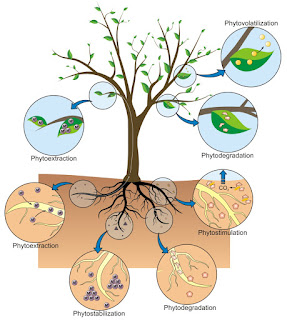
Phytoremediation is one of the best technique to use plants to get rid of hazardous chemicals. Scientists, working on stress biology, are trying to discover the underlyinmolecular mechanism and candidate genes to engineer plants against different heavy metals and hazardous components. For example, explosive like 2,4,6-trinitrotoluene (TNT) is a worldwide pollutant, contaminating manufacturing waste sites, mines, current and former conflict zones, and military land. The U.S. Department of Defense has an estimated 10 million hectares of operational ranges contaminated with munitions constituents and rated as a class C carcinogen by the Environmental Protection Agency. TNT has toxic effects on all living organisms: in animals, causing hepatitis, anemia, hyperplasia of bone marrow, and cataracts, and in soil, severely affecting microbial diversity and the establishment of vegetation. In plants, the majority of TNT remains in the roots, where growth and development is inhibited, red...

Vale Jan Anderson (1932-2015)

Image
It with deep sadness that I convey this message. Jan Anderson died tragically early, on Friday 28 August. She suffered a fall at home and while in hospital, lapsed into unconsciousness from which she never recovered. Jan served ASPS (Australian Society of Plant Scientists) as president from 1992 to 1994 and was elected to the Royal Society in 1996. I had the privilege of working in her lab as a post doctoral fellow in the mid 1980s. Her passion was the light reactions of photosynthesis, a field in which she has left an indelible mark, breaking the dogma of equal proportions of photosystem one and two, demonstrating lateral heterogeneity in their location in thylakoid membranes, to mention but two. Although she suffered arthritis in one knee, her mind was as sharp as ever and she had just returned from the UK where she had been invited to celebrate Jim Barber’s birthday. Australian science has lost a wonderful colleague, but her example should be a beacon for the rest of us to a...

Root Array

Image
The plant root is an amazing system to study. Because in both radial and longitudinal axis, it is highly organized during developmental period. And, all sorts of cell division for root only happens in root apical meristem and later those cells move upward and acquire their identities. In addition, the expression of genes in longitudinal axis either progressive or repetitive based on the role of particular genes during different developmental stage. (See the animation) Philip Benfey, one of the leading researcher in root biology, studies the developmental mystery of root.  His research focus is to understand how cells acquire their identities. To answer this question, he uses Arabidopsis thaliana root as a model system because of its simplicity, organization and organized pattern. His lab employs the combination of genetics, molecular biology and genomics to study the genes necessary for root development along with radial and longitudinal patterning. His lab discovered two...

Book Review : My Life As A Plant

Image
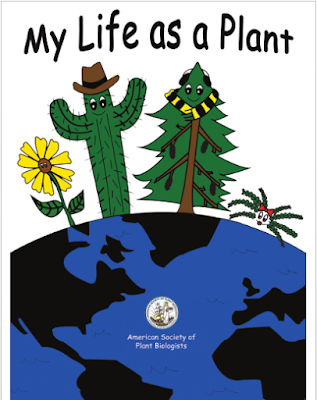
The book, My Life As A Plant, is an initiative of Dr. Alan M. Jones and Dr. Jane Ellis from the University of North Carolina at Chapel Hill to provide an illustrative understanding about the basic of plant biology for school kids. The book is written in a story telling way to explore the world of plants.  They become the winner of  ASPB Education Foundation Grant program for such an interactive story.  And it has been published by American Society of Plant Biologists (ASPB). In addition, the book is available in not only English, but also in Japanese, German, Spanish, Russian, French, Italian, Portuguese, Chinese, Farsi, Arabic, Catalan, Lituanian.  The American Society of Plant Biologists has developed the following  Principles of Plant Biology   to provide basic plant biology concepts for science education at the K-12 levels and to help students gain a better understanding of plant biology. This book tries to disseminate this knowledge throug...

Luminaries : Inspiration #01

Image
"At all career stages, we must understand the layer below us (a more fundamental one) and a layer above us (a more applied or complex one). Thus, if we are working looking at a single plant level, we should aim to understand what is happening at a cellular/molecular level and also the crop level. This gives us entry into more fundamental science and entry into the application of our science."  Richard Richards CSIRO Fellow, CSIRO Plant Industry, Canberra, Australia  Source: Luminaries ASPB news (March/April 2015. Volume 42, Number 2)

Measuring Cytokinin In Zeptomole Level

Image
Phytohormone cytokinin is well studied since its discovery by Folke Skoog and colleagues around 60 years ago. Cytokinin promotes cell division (cytokinesis), cell growth, differentiation and affect apical dominance, axillary bud growth, leaf senescence and so on. Most interestingly, it interacts with other hormones like auxin, ethylene, abscisic acid, gibberellins, and strigolactones. More precisely, the balance between cytokinin and auxin underlies their critical, antagonistic roles in regulating organ initiation, embryogenesis, meristem function, and other crucial processes. Phytohormone levels are thought to be tightly regulated both temporally and spatially. In the root of Arabidopsis thaliana , an auxin gradient is observed. But, such a gradient study for cytokinin has not done yet.  This is challenging for cytokinin, because cytokinins are present at extremely low levels (pmol/ g -21  fresh weight, 100-fold lower than auxin levels) and consist of several related...